
 Home > News
> News Information
Home > News
> News Information
Four principles for selecting materials for precision metal stamping parts:
1. For fixed length boards, try to choose the appropriate size. After cutting from the steel plant, there is no need for secondary cutting, reducing cutting costs; The workload of cutting has improved work efficiency.
2. The thickness of the board has deviation requirements, usually within the allowable deviation range, and the board with smaller deviation should be selected first.
3. The determination of the shape and size of the expansion plate for stamping parts is a prerequisite for analyzing the degree of deformation of stamping parts, designing processes, and developing process specifications. If the shape of the board is appropriate, it can not only significantly improve the uneven distribution of deformation along the board, but also increase the forming limit, reduce the height of the protrusions, and reduce the margin of cutting In addition, for some parts that are directly formed after cutting, if accurate sheet shapes and sizes can be provided, the number of trial molds can be reduced, thereby shortening the production cycle and improving productivity.
4. When selecting materials for product design, avoid using high-end materials that may result in excessive product performance. At the same time, while meeting product and process requirements, try to choose materials and thicknesses from existing mass-produced models to form a material platform. Provide convenience for subsequent procurement and inventory management.
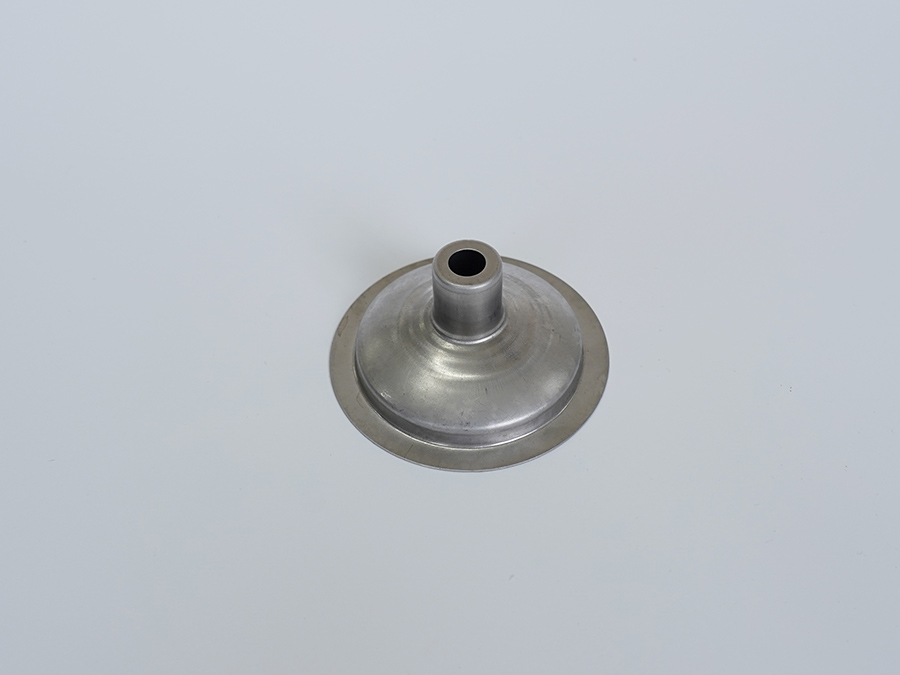
The processing technology of precision metal stamping parts should follow five principles:
1. When the cross-sectional quality and dimensional accuracy requirements of metal stamping parts are high, it is possible to consider adding a trimming process after the stamping process or directly using a precision punching process.
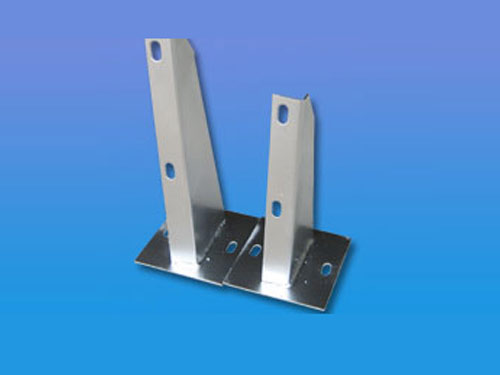
2. The number of bending processes for bent parts mainly depends on the complexity of their structure and shape, determined by the number of bending angles, relative positions, and bending directions. When the bending radius of the bent part is less than the allowable value, an additional shaping process is added after bending.
3. The number of processes for drawing parts is related to material characteristics, drawing height, drawing steps, drawing diameter, material thickness, and other conditions, and needs to be determined after calculating the drawing process. When the corner radius of the stretched part is small or the dimensional accuracy requirement is high, a shaping process needs to be added after stretching.
4. In order to improve the stability of the stamping process, it is sometimes necessary to increase the number of processes to ensure the quality of the stamped parts.
5. Metal stamping parts with simple shapes are punched out using a single process mold. For workpieces with complex shapes, due to limitations in mold structure or strength, the inner and outer contours of the mold should be divided into several parts, requiring multiple stamping processes. If necessary, continuous molds can be used. For metal stamping parts with high flatness requirements, a leveling process can be added after the stamping process.


.jpg)


 Mobile : 13427922201 (Mr. Tang)
 E-mail : long105@163.com
 Building 39, Zone C, Liantang Industrial City, Shangcun Community, Gongming Street, Guangming District, Shenzhen, China